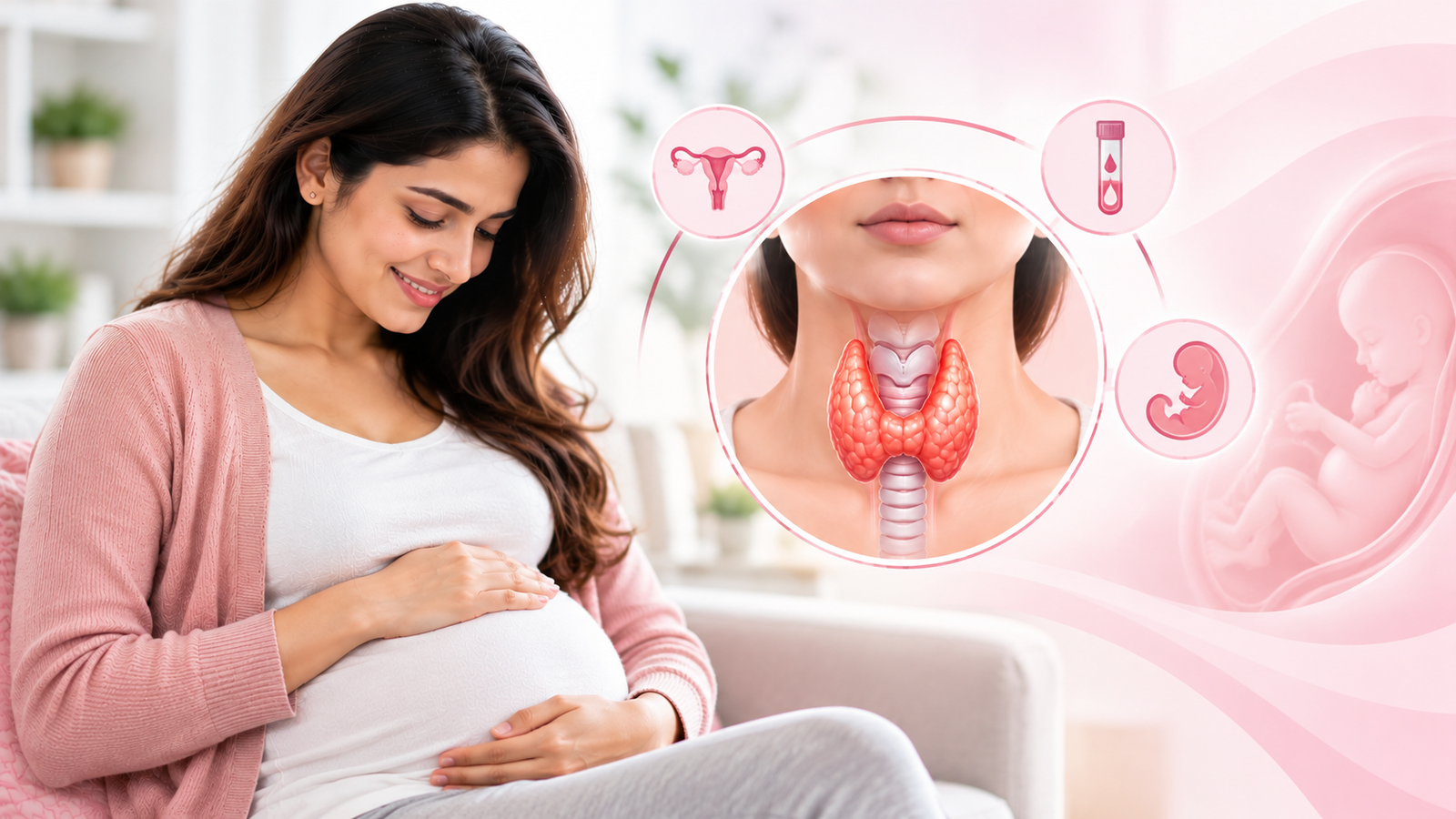
Thyroid health can become especially important when you are planning a pregnancy or are already pregnant. Both hypothyroidism and hyperthyroidism may require medical evaluation and monitoring during this period.
At Venus Women’s Hospital & IVF Center, Rajkot, thyroid-related fertility and pregnancy concerns can be evaluated alongside your reproductive and obstetric needs. The focus is on understanding your thyroid condition, reviewing relevant test results, monitoring changes during pregnancy and coordinating treatment according to your individual situation.
If you have been diagnosed with thyroid disease, are taking thyroid medication, or have been advised to check your thyroid while planning pregnancy, specialist consultation can help you understand the next steps.
Thyroid management can be relevant at three important stages:
If you are planning to conceive, your doctor may review your thyroid history, current medication and recent thyroid function tests.
This can help identify whether your thyroid condition needs further evaluation or treatment adjustment before conception.
Pregnancy causes physiological changes that can affect thyroid hormone requirements. Women with known thyroid disorders may therefore require thyroid function monitoring at appropriate intervals.
Thyroid-related issues can also require attention during the postpartum period. Your doctor can advise whether follow-up thyroid testing or medication review is appropriate.
Thyroid hormones interact with several processes involved in reproductive health.
When thyroid function is significantly abnormal, it may be associated with:
Changes in menstrual cycles
Ovulation-related problems
Difficulty conceiving
Other hormonal or reproductive concerns
However, having a thyroid disorder does not automatically mean infertility.
If pregnancy is taking longer than expected, fertility assessment can consider thyroid health alongside ovarian, uterine, tubal and male fertility factors.
Hypothyroidism occurs when the thyroid gland does not produce enough thyroid hormone.
Some women already know they have hypothyroidism before becoming pregnant, while others are diagnosed during pregnancy testing or routine evaluation.
Appropriate treatment and monitoring are important because untreated or inadequately treated hypothyroidism during pregnancy can be associated with pregnancy complications.
For women taking thyroid hormone replacement, pregnancy may change the amount of thyroid hormone required. Medication adjustments should therefore be made under medical supervision rather than independently.
Hyperthyroidism occurs when the thyroid produces excessive thyroid hormone.
It may be associated with conditions such as Graves' disease and requires careful management during pregnancy.
Treatment decisions during pregnancy need to consider both maternal thyroid control and fetal safety. The appropriate medication and monitoring plan depends on the individual's condition.
Women with known hyperthyroidism who are planning pregnancy should discuss their condition with their doctor before conception whenever possible.
The exact tests required depend on your symptoms, medical history and previous thyroid diagnosis.
TSH (Thyroid-Stimulating Hormone) is commonly used to assess thyroid function.
During pregnancy, TSH results need to be interpreted using pregnancy-appropriate reference ranges where available.
Free T4 can provide additional information about circulating thyroid hormone levels and may be evaluated alongside TSH.
In selected situations, thyroid antibody testing may be recommended.
For example, women with Graves' disease or certain autoimmune thyroid conditions may require additional assessment during pregnancy.
The American Thyroid Association recommends appropriate thyroid function monitoring and individualized management during pregnancy.
Not every woman requires the same thyroid testing schedule.
However, preconception thyroid evaluation may be particularly relevant if you:
Already have hypothyroidism or hyperthyroidism
Take thyroid medication
Have previously had abnormal thyroid tests
Have a history of thyroid surgery
Have autoimmune thyroid disease
Have experienced fertility difficulties
Have had previous pregnancy complications
Have symptoms suggestive of thyroid dysfunction
Your doctor can determine which tests are appropriate rather than relying on a single thyroid value from an online reference range.
One of the most common concerns among women is:
“I take thyroid medicine. Should I stop it when I become pregnant?”
Medication should not be stopped or changed without medical advice.
For women with hypothyroidism who take levothyroxine, the required dose may increase during pregnancy. Early communication with the treating doctor is therefore important after pregnancy is confirmed.
The correct dose is individualized according to thyroid test results and pregnancy stage.
Iron and calcium supplements commonly used during pregnancy can interfere with levothyroxine absorption if taken too closely together.
Your doctor can explain the appropriate timing for thyroid medication and supplements.
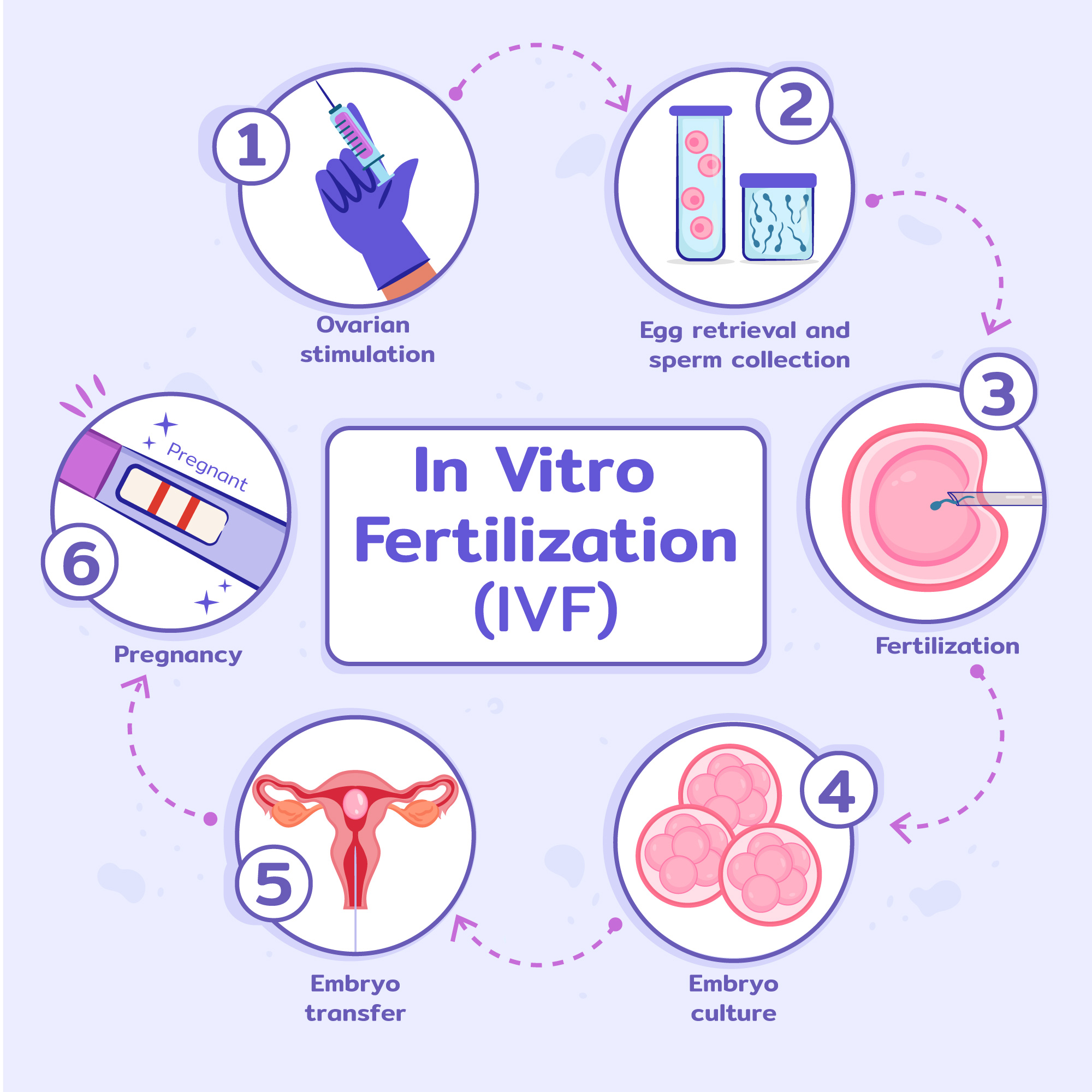
Thyroid health may also need consideration when a woman is undergoing fertility treatment.
If you are planning:
Ovulation treatment
Other assisted reproductive treatment
Your fertility specialist may review relevant thyroid results as part of the overall treatment assessment.
Thyroid management is only one part of fertility care. Age, ovarian reserve, ovulation, sperm factors, uterine health and other reproductive factors may also influence the treatment plan.
Women planning pregnancy can discuss their thyroid history, fertility goals and current treatment before conception.
Known thyroid disorders can be followed alongside routine antenatal care, with testing recommended according to individual circumstances.
When thyroid concerns coexist with difficulty conceiving, thyroid management can be considered alongside a broader fertility assessment.
Some thyroid conditions may require closer pregnancy monitoring. The appropriate level of follow-up depends on the specific thyroid disorder and pregnancy risk factors.
There is no single thyroid treatment plan for every woman. Medication, testing frequency and follow-up are determined according to the patient's condition.
MBBS, DGO, DNB, MNAMS
Sonologist | IVF Specialist
MBBS, DGO
Infertility Specialist | High-Risk Pregnancy Expert
MD, Diploma in ART (Germany)
IVF Specialist | Endoscopic Surgeon
MD (OBS & GYNAEC)
Advanced Endoscopic Surgeon | High-Risk Pregnancy Expert
Yes. Having a thyroid disorder does not automatically prevent pregnancy. However, uncontrolled thyroid dysfunction may affect reproductive health, so appropriate evaluation and management are important.
Significant or untreated hypothyroidism can be associated with menstrual and ovulatory problems that may make conception more difficult in some women.
If you have known thyroid disease or relevant risk factors, discussing thyroid testing during preconception planning with your doctor is appropriate.
Some thyroid medications are routinely used during pregnancy when medically indicated. Your medication and dose should be reviewed by your doctor rather than changed independently.
The frequency depends on your thyroid condition, pregnancy stage, medication and previous test results. Your doctor will determine an appropriate monitoring schedule.
No. Thyroid disease does not mean that miscarriage will definitely occur. However, untreated or inadequately controlled thyroid dysfunction can be associated with certain pregnancy risks, which is why appropriate management matters.
Thyroid function may be considered as part of the overall fertility evaluation and treatment planning, particularly in women with known thyroid disease or abnormal thyroid tests.
If you have thyroid disease and are planning pregnancy, are already pregnant, or are experiencing fertility concerns, a specialist evaluation can help determine the appropriate testing, treatment and monitoring plan.
Venus Women’s Hospital & IVF Center
Vijay, Ramdham-2 Corner, Near KKV Circle,
Beside SBI Bank, Kalavad Road, Rajkot – 360005
Phone: +91 90999 00181 | +91 90999 00182
Email: venuswomenshospital@gmail.com
OPD Timings:
Monday–Friday: 10:00 AM–01:00 PM | 05:00 PM–07:30 PM
Saturday: 10:00 AM–01:00 PM
Sunday: Emergency Services Only
Discuss your thyroid condition, pregnancy plans and current test results with a specialist to develop an appropriate fertility or pregnancy care plan.










.png)







.png)
.png)